

Refinancing mortgage loans makes sense when you can lower your interest rate, adjust your loan term, access home equity, eliminate private mortgage insurance or convert to a fixed-rate loan. Each scenario has measurable financial value when market conditions and your circumstances align.
Market timing is important as it influences your refinancing outcomes. Refinance applications have fallen significantly as homeowners reacted to rate fluctuations. Knowing when you should refinance your mortgage can maximize your potential savings.
5 Scenarios When It’s Worth Refinancing
If you’re wondering when to refinance your mortgage, certain scenarios consistently deliver significant value for homeowners. If your situation matches any of the below, refinancing could be a financial solution for you.
1. Lower Your Interest Rate and Monthly Payment
The most common reason for refinancing mortgage loans is to reduce the interest rate. Even a modest rate reduction can yield significant savings over the life of your loan, affecting your monthly budget and long-term financial health.
For example, for a $400,000 30-year fixed mortgage, dropping your interest rate from 7.0% to 6.5% reduces your monthly payment by $133 and saves $47,858 in total interest. These savings grow over time, freeing up capital for other financial priorities. Current mortgage rates may provide opportunities worth evaluating against your existing rate.
2. Adjust Your Loan Term to Pay Off Your Home Faster or Reduce Payments
You can adjust your loan term to suit your financial strategy.
Switching your loan from a 30-year to a 15-year term shortens your payoff timeline and reduces your total interest payments. Since your monthly payments increase, you build equity and achieve debt-free homeownership faster.
You can also extend the loan term. An extension reduces monthly payments and provides immediate budget relief.
Strategically adjust the terms of your mortgage to support your current financial position while improving your overall financial health.
3. Access Home Equity With a Cash-Out Refinance
A cash-out refinance replaces your present mortgage with a new loan, allowing you to receive the difference in cash at closing. You can use the equity you’ve built to fund significant financial needs or investments.
Homeowners choose cash-out refinancing for several reasons. These include:
- Home improvements: Increase your property value and enhance your living space through renovations.
- Debt consolidation: Pay off higher-interest debts.
- Funding education: Support college expenses or professional development investments.
The key advantage is accessing substantial capital at mortgage interest rates, which are lower than those for personal loans or credit cards. Cash-out refinancing makes sense when your home’s increased value and your equity position support the larger loan amount.
4. Eliminate Private Mortgage Insurance (PMI)
When homeowners have less than 20% equity in their property, lenders typically require PMI on conventional loans to protect their financial interest. Once your home’s value increases and crosses the 20% equity threshold, refinancing into a new loan eliminates PMI.
This scenario applies when property values increase in your area or when you’ve paid a significant portion of your loan balance. Removing PMI can add $100 to $300 to your cash flow each month. The cost reductions from eliminating this insurance often justify refinancing expenses within a reasonable time frame.
5. Convert an Adjustable-Rate Mortgage (ARM) to a Fixed-Rate Loan
ARMs start with lower interest rates than fixed-rate products, but recurring adjustments can push your payment higher than fixed-rate options. Converting to a conventional fixed-rate loan provides stability and predictable payments.
This protection against future increases matters when your ARM approaches its adjustment period. Fixed-rate mortgages lock your rate for the loan’s term, removing uncertainty from your budget.
There may also be value in converting from a fixed-rate loan to a new ARM. With a lower initial rate, you can reduce monthly payments, particularly if you are not planning to stay in your home long term. Depending on the ARM structure, interest rates may not adjust for the first five, seven or 10 years, offering lower initial payments for the first period.
Calculate Your Refinance Break-Even Point
Refinancing includes closing costs weighed against your potential savings. Your break-even point estimates how long you need to remain in your home for refinancing to be beneficial.
What Are Refinancing Closing Costs?
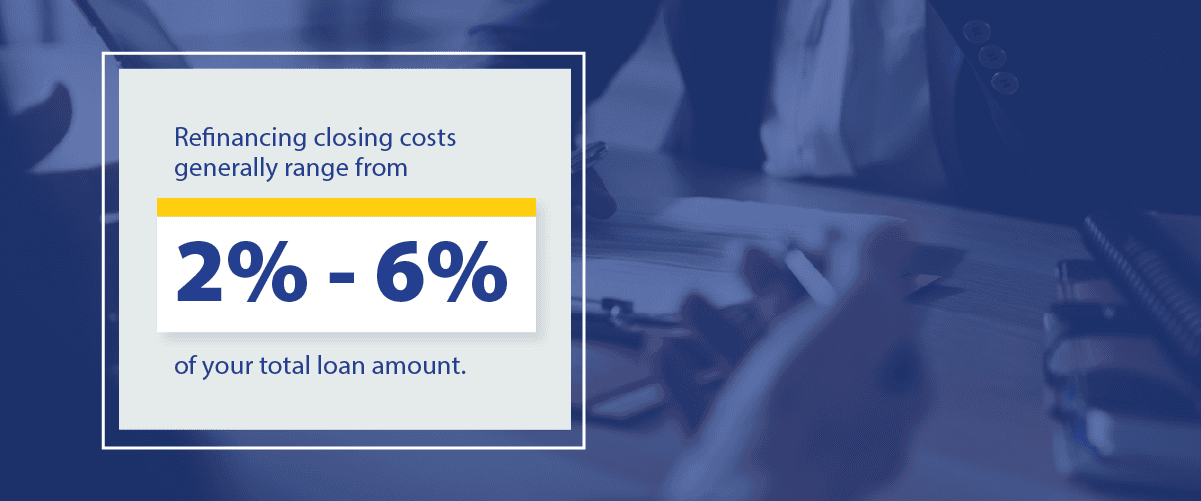
Refinancing closing costs generally range from 2% to 6% of your total loan amount. These represent the “cost” part of your cost-benefit analysis and typically include:
- Application fee: This is the cost for initial processing and administration.
- Appraisal fee: This covers a professional assessment of your home’s current market value.
- Title insurance: Protect yourself against title defects or ownership disputes.
- Origination fee: The lender charges a fee to create and process your new loan.
Once you know these costs, you can calculate whether refinancing makes financial sense for your specific situation.
The Break-Even Formula
Before you consider refinancing, you need to calculate your break-even timeline. To calculate your break-even point, divide your total closing costs by your monthly payment reduction to determine how many months you need to recoup your investment. For example, if refinancing costs $4,000 and reduces your monthly payment by $200, you break even in 20 months. After that point, every month generates pure benefit.
A mortgage calculator will help you estimate your savings and determine your specific break-even point before committing to refinance.
What You Need to Refinance
Preparing your documentation and meeting lender requirements streamlines the refinancing process. You need to ensure you have the necessary financial and documentation elements in place to move forward efficiently from application to closing.
Financial Requirements
Lenders evaluate several financial qualifications, such as:
- Home equity: Lenders require at least 20% equity in your home, calculated by subtracting your remaining mortgage balance from your home’s current market value.
- Credit score: Score requirements differ by loan type, but to secure competitive rates, you generally need a score of 620 or higher, with better rates available at 740 and above.
- Debt-to-income ratio: Lenders analyze your monthly debts against your income to assess risk and ensure you can afford the new payments.
- Home appraisal: Lenders often require a professional assessment to confirm your property’s current market value and loan-to-value ratio.
Required Documentation
When you apply for refinancing, you need to provide documentation verifying your employment history, creditworthiness and overall financial situation.
These documents include:
- Proof of income: Lenders require recent pay stubs, W-2 forms and employment confirmation.
- Asset verification: Provide bank and brokerage statements covering the last two months to verify funds for closing costs.
- Current loan information: Provide the most recent monthly statement for your existing mortgage.
- Homeowners insurance: You need to show proof of an active policy.
Organizing these elements before you begin reduces delays and accelerates approval.
Know When It’s Best Not to Refinance
Strategic refinancing requires an honest assessment of scenarios in which refinancing may not deliver value. These scenarios protect you from costly decisions that look appealing on the surface but fail to deliver results.
Refinancing may not serve your interests when:
- You plan to move soon: If you sell your home before reaching your break-even point, you lose money on closing costs without capturing the savings.
- You have poor credit: Low credit scores result in higher interest rates that may not improve your current situation.
- You have limited equity: Insufficient equity limits your refinancing options and may require costly PMI.
High fixed refinancing costs are a significant barrier, especially with smaller loan balances. When closing costs are a large percentage of your loan amount, the break-even timeline extends too far to be practical. Determining whether it is worth refinancing requires comparing these expenses with realistic projections based on how long you plan to stay in your home.
Find Your Refinancing Strategy With Pacific Mortgage Group

Refinancing mortgage loans can reduce monthly payments, unlock home equity, or secure long-term rate stability when the timing and strategy align with your goals. Each of the five scenarios we’ve covered requires careful analysis of your unique financial position, current market conditions and long-term plans. The difference between a smart refinance and a costly mistake often comes down to timing, accurate break-even calculations and access to competitive rates. The right strategy for your specific situation requires expert analysis and industry connections.
Pacific Mortgage Group offers nearly two decades of proven expertise to homeowners making refinancing decisions. We analyze your circumstances, connect you with competitive wholesale lender rates through our extensive network and guide you through the refinancing process from application to closing.
When it makes sense to refinance, contact us to discuss your refinancing strategy or get a loan quote today.